

In the world of control panels, user experience is not merely about aesthetics—it is about safety, efficiency, and operational confidence. Every time an operator reaches for a switch, the interaction must be intuitive, unambiguous, and reliable. Among the many components that constitute a control panel, rocker switches are among the most frequently used. When these switches are equipped with LED illumination, the user experience transforms significantly.
The question that product designers, system integrators, and equipment manufacturers consistently ask is: How can LED illuminated rocker switches improve user experience on control panels? The answer lies in a combination of visual clarity, ergonomic design, operational feedback, and long-term reliability. This article explores each of these dimensions in depth, drawing on industry expertise and technical insights to provide a comprehensive understanding of how LED illuminated rocker switches elevate control panel usability.
Zhechi, a professional manufacturer founded in 2011 specializing in smart home and electrical products, has been at the forefront of delivering high-quality illuminated switch solutions to markets worldwide, including the United States, France, Australia, and Italy. With a commitment to quality and innovation, Zhechi continues to shape how users interact with control panels across industries ranging from industrial automation to renewable energy systems.
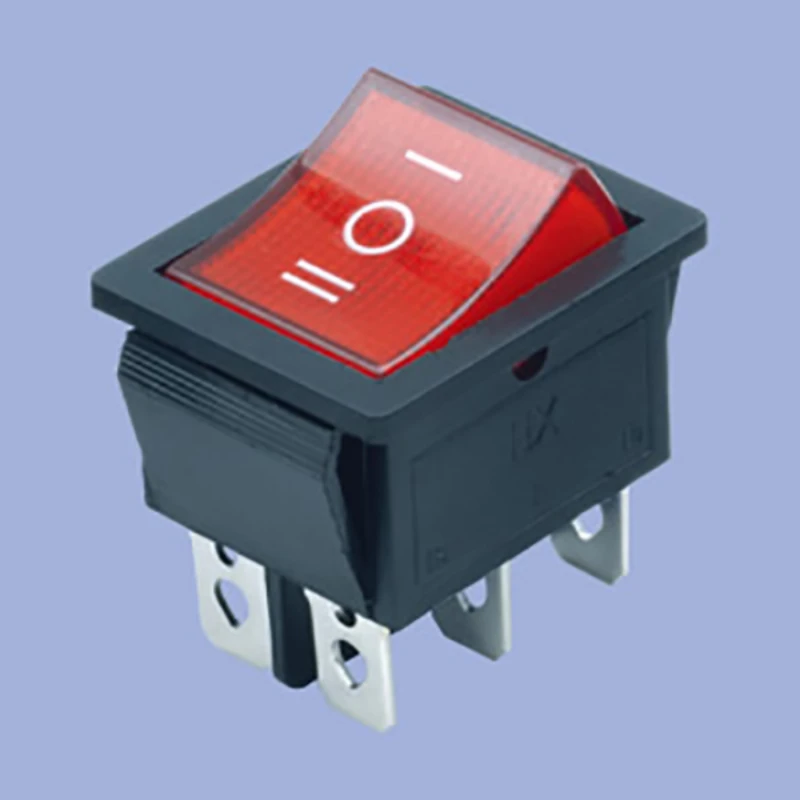
The most immediate and obvious benefit of a LED illuminated rocker switch is its visual presence. In environments where lighting conditions vary—such as industrial facilities, marine vessels, outdoor equipment, or smart home control centers—being able to instantly identify a switch and its state is critical.
In traditional control panels, operators in dimly lit environments often struggle to locate the correct switch. Fumbling for the right control not only wastes time but also introduces the risk of activating the wrong function. A LED illuminated rocker switch solves this problem by providing a consistent, visible light source that makes the switch stand out even in complete darkness.
Modern LED technology offers exceptional brightness while consuming minimal power. Unlike incandescent lamps, which have a shorter lifespan of approximately 7,000 hours, LEDs can operate for up to 100,000 hours while maintaining consistent brightness levels. This means that once a LED illuminated rocker switch is installed, it will provide reliable visual guidance for the entire operational life of the equipment.
Beyond simple visibility, LED illumination enables sophisticated status indication through color coding. A LED illuminated rocker switch can use different colors to convey distinct states: green for normal operation, red for fault conditions, amber for standby, or blue for specialized functions. This visual language allows operators to assess system status at a glance, without needing to read labels or consult manuals.
For applications requiring even greater nuance, dual-color and RGB LED illuminated rocker switches are available. These can display different colors depending on the switch state, providing immediate feedback when a function is activated or when a fault occurs. Such capabilities are particularly valuable in complex control panels where multiple switches are arranged in close proximity.
The relationship between visual feedback and error reduction is well documented. When operators can clearly see which switches are active and which are not, the likelihood of accidental activation or failure to deactivate decreases substantially. In industries such as medical equipment, aviation, and industrial automation, where errors can have serious consequences, the use of LED illuminated rocker switches is becoming standard practice.
Consider a control panel for a solar photovoltaic system or an industrial DC circuit breaker panel. An operator monitoring multiple feeds at night or in an equipment room with poor lighting can instantly verify that a specific circuit is de-energized when the corresponding LED illuminated rocker switch is off—or confirm active status when the LED is illuminated. This visual confirmation reduces reliance on secondary indicators and accelerates decision-making.
While visual feedback is essential, the overall user experience of a LED illuminated rocker switch also depends on how the switch feels and operates. Tactile and audible feedback work in concert with LED illumination to create a complete interaction loop that satisfies user expectations and enhances safety.
Quality LED illuminated rocker switches incorporate snap-action contact mechanisms that provide distinct tactile feedback upon actuation. When the rocker is pressed, the user feels a crisp, definitive click that confirms the circuit has changed state. This tactile confirmation is particularly important in noisy environments where audible feedback might be masked.
Zhechi's manufacturing philosophy emphasizes precision and durability. With a strict quality control system and a team of professional technicians, Zhechi ensures that every LED illuminated rocker switch delivers consistent tactile performance across thousands of actuation cycles. Users who interact with a well-designed rocker switch develop muscle memory and confidence, reducing hesitation and improving operational efficiency.
The feel of a LED illuminated rocker switch is influenced by the force required to operate it. Switches that are too stiff cause operator fatigue, especially in applications requiring frequent actuation. Conversely, switches that are too light may be triggered inadvertently. The ideal LED illuminated rocker switch strikes a balance, offering enough resistance to prevent accidental activation while remaining comfortable for repeated use.
Ergonomic considerations also extend to the shape and contour of the rocker actuator. Curved, textured surfaces provide better grip, particularly for operators wearing gloves in industrial or marine settings. Zhechi's product development process incorporates user feedback and ergonomic principles to create LED illuminated rocker switches that feel as good as they function.
In addition to tactile feedback, many LED illuminated rocker switches produce an audible click when actuated. This sound provides a third layer of confirmation—visual, tactile, and auditory—ensuring that operators know with certainty that their command has been registered. For control panels in semi-noisy environments where visual attention may be divided, this audible cue serves as an invaluable backup indicator.
A control panel is more than a functional interface; it is also a reflection of the equipment's quality and the manufacturer's attention to detail. LED illuminated rocker switches offer extensive customization options that allow designers to create panels that are both highly functional and visually cohesive.
Custom legends and markings on a LED illuminated rocker switch provide immediate identification of function without relying on external labels. Laser etching, screen printing, and pad printing are common methods for applying symbols, text, or logos directly to the rocker surface. When combined with LED backlighting, these markings become clearly visible even in low-light conditions.
The ability to choose LED colors is one of the most powerful customization tools available for LED illuminated rocker switches. Red, green, blue, amber, and white are common options, with some manufacturers offering specialized colors for niche applications. Advanced designs incorporate RGB LEDs that can cycle through multiple colors or change dynamically based on system status.
For control panels in smart home or commercial building applications, the aesthetic appeal of LED illuminated rocker switches matters. A well-designed switch with soft, uniform illumination contributes to a modern, professional appearance that enhances the perceived quality of the entire installation.
LED illuminated rocker switches are available in a variety of form factors to accommodate different panel designs. Single-pole and double-pole configurations, SPST and DPDT circuits, and various terminal options (solder, quick connect, screw) provide flexibility for designers. Snap-in mounting simplifies installation and reduces assembly time, which is particularly beneficial for high-volume production environments.
User experience is not only about initial interaction; it is also about long-term reliability. A LED illuminated rocker switch that fails prematurely or degrades in harsh conditions creates frustration and erodes confidence. Durability and environmental resilience are therefore critical factors in switch selection.
IP (Ingress Protection) ratings indicate how well a LED illuminated rocker switch resists dust and moisture. For indoor control panels, IP40 may be sufficient. However, for outdoor equipment, marine applications, or industrial environments with wash-down requirements, higher ratings such as IP65, IP66, IP67, or even IP69K are necessary.
An IP65-rated LED illuminated rocker switch is protected against low-pressure water jets and dust ingress, making it suitable for many industrial and outdoor applications. For fully submersible applications, IP68-rated switches provide protection against continuous immersion, ensuring reliable operation even in demanding conditions.
The operating temperature range of a LED illuminated rocker switch determines its suitability for different climates and equipment enclosures. High-quality switches are designed to perform reliably from sub-zero temperatures to extreme heat, with ranges such as -25°C to +85°C being common among reputable manufacturers.
Electrical life—the number of cycles a switch can endure under rated load—is another key metric. A LED illuminated rocker switch with a 10,000-cycle rating at full load is suitable for many applications, while heavy-duty designs may offer even longer service life. Zhechi's commitment to quality manufacturing ensures that its LED illuminated rocker switches meet or exceed industry expectations for longevity.
Internationally recognized safety certifications provide assurance that a LED illuminated rocker switch meets rigorous standards for electrical safety and performance. UL (United States), ENEC (Europe), CSA (Canada), and CQC (China) certifications are among the most respected marks in the industry. A LED illuminated rocker switch carrying these certifications has undergone extensive testing for dielectric strength, insulation resistance, temperature rise, and fault tolerance.
Zhechi operates under the principle of "quality first, customer first," ensuring that all products comply with applicable safety standards. For equipment manufacturers, specifying certified LED illuminated rocker switches simplifies regulatory approval and demonstrates a commitment to user safety.
Selecting the right LED illuminated rocker switch requires understanding several technical parameters. The table below summarizes the key specifications that influence user experience and system compatibility.
When evaluating a LED illuminated rocker switch for a specific application, consider the electrical load characteristics, environmental exposure, required actuation frequency, and user ergonomics. Matching these parameters to the switch's specifications ensures optimal performance and user satisfaction.
A: In outdoor applications, such as marine vessels, solar photovoltaic combiner boxes, or agricultural equipment, control panels are frequently exposed to changing weather conditions, low light at dawn and dusk, and high humidity. A LED illuminated rocker switch improves user experience in three key ways. First, the LED illumination ensures the switch remains visible in dim lighting, allowing operators to locate and identify the correct control without fumbling. Second, color-coded LEDs (e.g., green for active, red for fault) provide immediate system status feedback even from a distance. Third, high-quality outdoor-rated LED illuminated rocker switches feature IP65 or higher ingress protection, meaning they resist rain, dust, and pressure washing, so the illumination remains functional regardless of weather. Many designs also incorporate textured, anti-slip actuators that are easy to operate with gloved hands, further enhancing usability in demanding outdoor conditions. The combination of visual feedback, environmental resilience, and ergonomic design makes LED illuminated rocker switches an ideal choice for outdoor control panels where user confidence and operational safety are paramount.
A: The primary difference lies in the additional power required to drive the LED illumination. A standard non-illuminated rocker switch consumes no power when the circuit is open and only minimal power (due to contact resistance) when closed. In contrast, a LED illuminated rocker switch includes an internal LED that draws current whenever the illumination function is active. However, modern LEDs are extremely energy-efficient, typically consuming between 5mA and 20mA at 12VDC or 24VDC. This translates to approximately 0.06 to 0.24 watts per switch—a negligible amount in most applications. For AC-powered applications, some LED illuminated rocker switches incorporate neon lamps instead of LEDs, which consume slightly more power (around 0.5 to 1 watt) but are still highly efficient compared to incandescent alternatives. LED-based illuminated switches offer an additional advantage: their virtually unlimited service life (up to 100,000 hours) means the illumination will not need replacement, whereas neon or incandescent lamps degrade over time. Thus, while a LED illuminated rocker switch does consume more power than its non-illuminated counterpart, the difference is minimal, and the benefits in user experience and longevity far outweigh the marginal energy cost.
A: Choosing the correct LED color for a LED illuminated rocker switch depends on the intended application, the operating environment, and any industry standards that apply. For general purpose control panels, the most common convention is red for "stop," "emergency," or "fault"; green for "start," "running," or "normal status"; amber for "warning," "standby," or "attention required"; and blue for "reset" or auxiliary functions. In marine and aviation applications, red illumination is often preferred because it preserves night vision, while white or blue LEDs may be used in consumer products for aesthetic appeal. For equipment that must comply with industry-specific standards, consult the relevant regulations—for example, medical device panels often specify certain colors for different alarm states. If multiple functions need to be conveyed from a single switch, consider a dual-color or RGB LED illuminated rocker switch that changes color based on switch state. Such designs can indicate "off" (no illumination), "on" (green), and "fault detected" (red flashing), providing rich status information without adding extra components. Finally, consider visibility under different ambient lighting conditions: high-brightness LEDs are preferable for outdoor or brightly lit environments, while standard brightness suffices for indoor panels.
User experience on control panels is determined by how easily, confidently, and safely operators can interact with equipment. LED illuminated rocker switches address each of these dimensions by providing immediate visual feedback, reliable tactile confirmation, and long-term operational durability. From industrial machinery to renewable energy systems, from marine vessels to smart home interfaces, the adoption of illuminated rocker switches is transforming how users engage with control panels.
When designing or upgrading a control panel, the choice of switch component is not merely a technical detail—it is a user experience decision. A well-selected LED illuminated rocker switch reduces errors, accelerates response times, and communicates quality to end users.
As technology continues to evolve, the role of illuminated switches in human-machine interfaces will only grow. Through thoughtful design and quality manufacturing, LED illuminated rocker switches make control panels better in every measurable way.


